Operating Model for Business Growth | Overcoming Scaling Challenges
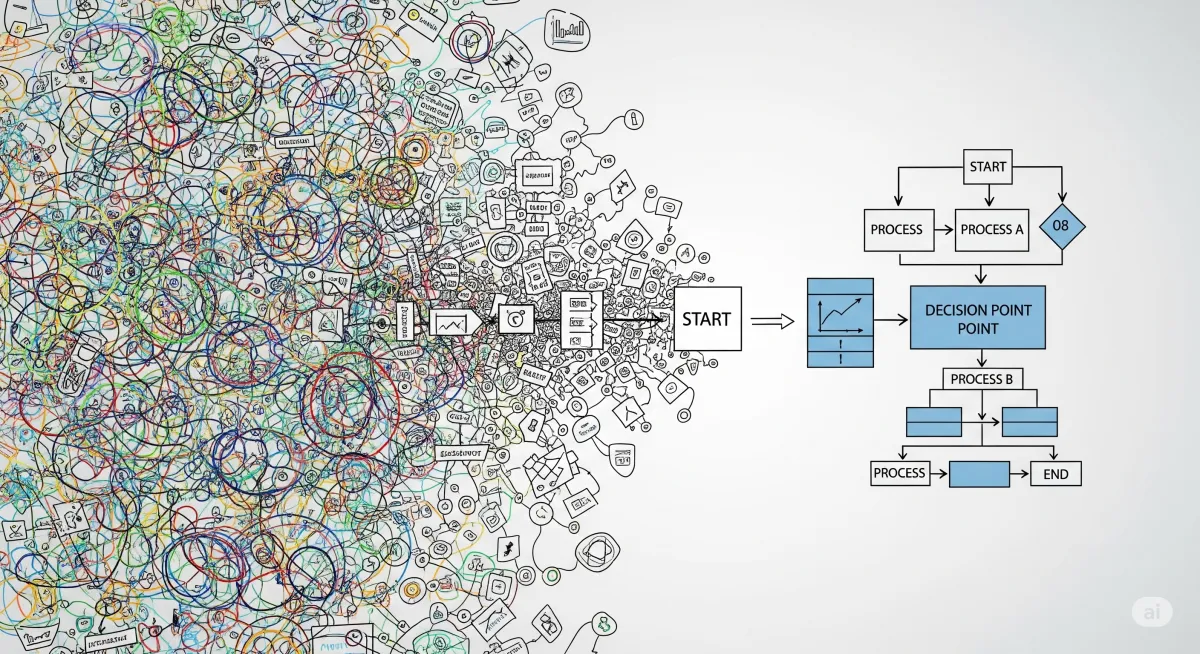
From Chaos to Clarity: Why Your Operating Model is Key to Scaling
What worked to get you here won't get you there. Learn how to design the operating model you need to overcome growing pains and thrive.
Struggling to scale is a common challenge for growing businesses. What worked when you were a small team often breaks down as you add people, complexity, and customers. The key to moving past this stage isn't just about hiring more people; it's about defining your Operating Model.
An operating model is the "how" of your business. It's the blueprint that defines how your company creates value for its customers. When you're small, this "how" is often informal—it's what's in your head, the way you and your original team instinctively work together. But as you grow, this informal system becomes a roadblock.
The Four Core Components of Your Operating Model
Scaling successfully requires you to intentionally design a more robust operating model. This model is built on four key components:
People: This goes beyond just headcount. It's about your organizational structure, the specific roles and responsibilities of your team members, and the skills and talent you need to achieve your goals. As you scale, you need to move from everyone "doing a bit of everything" to a more specialized and structured team.
Processes: This is how work gets done. It includes all your business processes, your decision-making protocols, and the established procedures for daily tasks. Without clear processes, communication breaks down, tasks fall through the cracks, and you lose efficiency.
Tools: These are the technologies and physical equipment that enable your team to do their jobs. As your business grows, so does the complexity of your technology stack. Your tools must be able to support a larger team and more complex operations.
Culture: This is the glue that holds everything together. Your culture defines your company's values, guiding principles, and how people interact. A strong, clearly defined culture ensures your team remains aligned, even as it expands.

Why Your Operating Model Matters for Growth
As a leader of a small, growth-oriented business, the question isn't whether you have an operating model; it's whether you have the right one. The informal, ad-hoc model that got you here will not get you to the next level.
Signs that you need to re-evaluate your operating model include:
A breakdown in communication: Your team is growing, and people are no longer on the same page.
Increased inefficiency: Tasks that were once easy now take too long or require too many people.
Siloed teams: Your teams are no longer working together effectively, and information is not being shared.
Difficulty onboarding new hires: Your processes are not clear enough to train new employees effectively.
By intentionally designing your operating model, you move from just reacting to growth to proactively enabling it. It's the blueprint for building a business that can not only survive but thrive at scale.
Does your operating model need an upgrade? Check out these key factors to see.
Ultimately, an effective operating model is the blueprint for sustainable business growth, ensuring that your company can scale without breaking down. But designing this blueprint requires more than just identifying the components, it demands a strategic, holistic approach. At Nexus North, we specialize in helping businesses architect a robust operating model, aligning your People, Processes, Tools, and Culture to eliminate friction and unlock your full growth potential. Let us help you build the foundation for a scalable, efficient, and resilient organization. Contact us today.
Return to Nexus North home.

